
Elektra at Theatre for a New Audience
Ted Hearne's Chorus a Wonder
By: Susan Hall - Nov 23, 2026

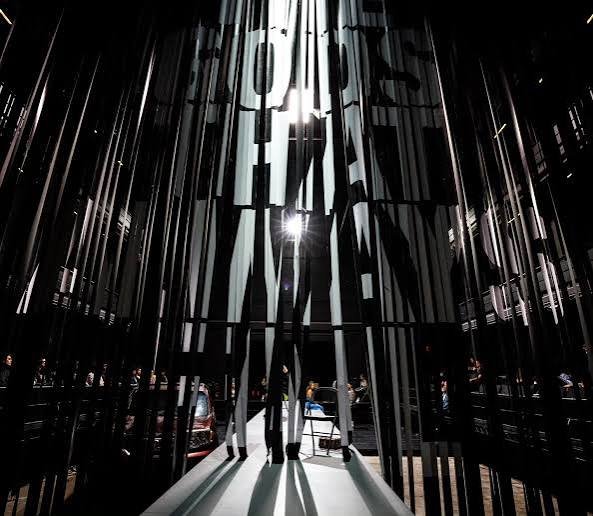
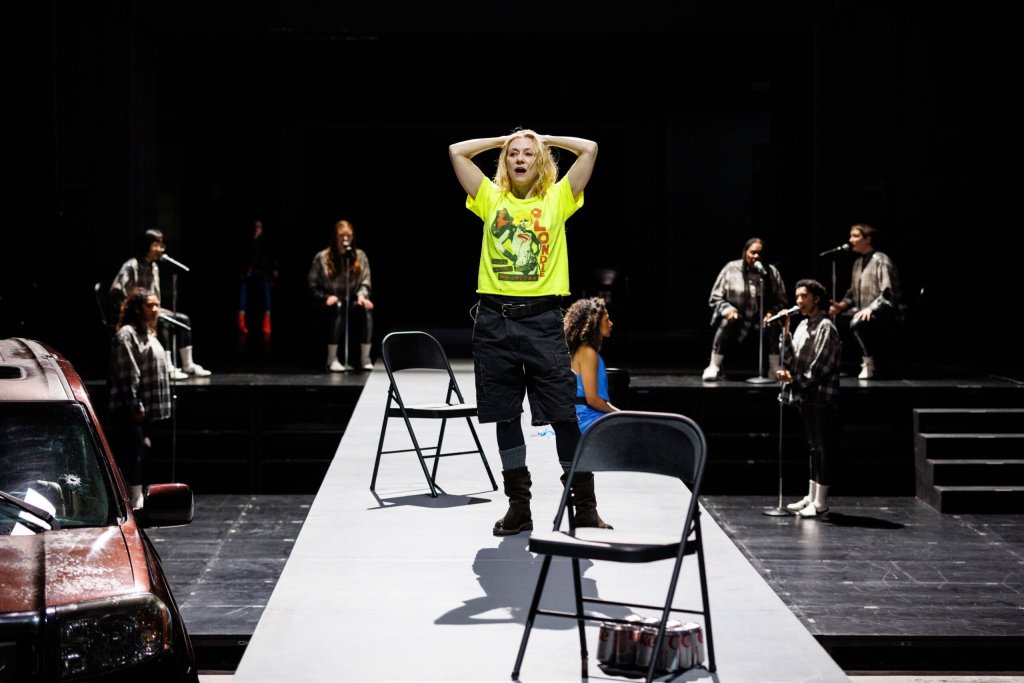
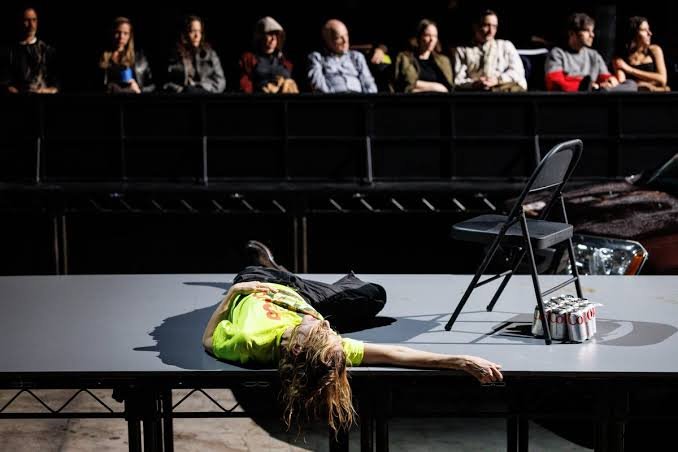
Anne Carson, Nobel Laureate 2026, is the translator of Sophocles’ Elektra, now playing at the Theatre for a New Audience. Carson describes the role of a translator as the person trying to get between the body and its shadow. That is where you dwell during this new production, directed by Daniel Fish.
The audience sits close to a catwalk before the lights dim and the production begins. The slippery rubber streamers that descend from the ceiling and move up and down the stage reminded one of the Salzburg Festival production of Richard Straus's opera Elektra . There Orestes is moving in shadow across the rocky back wall of the stage until he finally gets to Clytemnestra’s home. Fish’s Elektra does not have anything resembling a shadow approaching Mycenae, Unlike the Salzburg production in which used shadow to build dread, Orestes in Brooklyn sits with a baseball cap off the catwalk until he gets up and pours blood all over the catwalk toward the end of the play.
Theatre for a New Audience has used the catwalk effectively before. For their production of Waiting for Godot directed by Arin Arbus in 2023, the catwalk provided the road on which the characters dwell during the play’s progress. A yellow line dividing the road was brilliantly used as a barrier. Here, the catwalk’s purpose is not clear. It keeps the actors apart and close to the audience. Keeping them apart I found unsatisfying.
Although across the boards the acting is first rate, I was not particularly moved by Tina Benko in the title role. Her utterances of pain somehow fell dead to my ear. By contrast, her Jackie Kennedy, written by another Nobel prize winner, was ineffably moving and interesting. In Elektra her technical control and command of Carson's text don't translate into emotional warmth or heartbreak.
Carson's language is sharp, everyday contemporary in English. Jarring modernisms, biting sarcasm, and dry wit color the psychological ferocity of the characters. Benko shifts with the rhythms of words which reflect her spiraling grief. Because the production is “in our face’ the audience must engage, but it is the chorus that invites us to do this.
A group of six singers for the chorus. They perform the music of Ted Hearne a cappella. It was wonderful and apt, underlining the emotional state of characters and sometimes striking out on its own.
The performers and the chorus are first rate, but the staging almost sinks the evening. I was unable to figure out the director’s intentions and latch on to them. He seems to get lost in the shadow and never gets to the body.