

From Call It in the Air
Waiting for the Sublime
By: Gregory Light - Oct 21, 2026
Waiting for the Sublime
(Toronto 1972)
Sublime.
Since their Pape subway station encounter, less than two weeks earlier, life had been ‘sublime'. That is the word Joey used. Joanna used the word ‘fun’. Which was a start, he thought. Then she added ‘and happy’. Which made him smile. Which made her smile. Which made him feel sublime.
‘Finished your essay?’ she asked.
‘No, barely started.’
‘Still feeling good about it?’ He had shared some thoughts with her earlier that day. In her bed. Wine still on their breath.
‘I feel sublime,’ he said to her.
‘It’s going that well?’
‘No, because you called.”
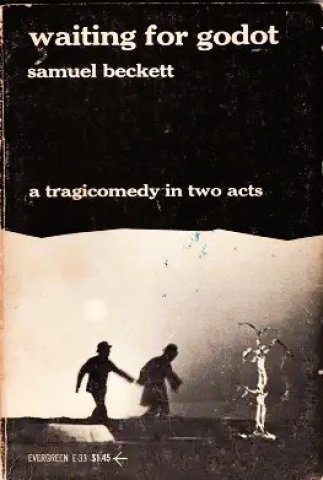
Joey was not feeling sublime about the essay. Especially since he was taking advantage of his role in Higgins’ history course by writing a paper on Samuel Beckett's play, Waiting for Godot. And despite having read a literary critic refer to the play as sublime. If anything, writing the essay was the opposite of sublime. Higgins had insisted he have carte blanche.
‘Whatever you want,’ he said. ‘Just be creative.’
It was more of a curse than a blessing. Unlimited choice was the same as no choice. He had finally left the choice to his penny. Dividing all the books on his shelves in two, he used his coin to reject half; the remaining half was then divided, and the penny tossed again and so on until much as Zeno's elegant paradox had eliminated the movement of an arrow in flight, Joey eliminated all but one book in his modest library. The showdown had been Waiting for Godot versus The Downtrodden; The latter a Société International de Psychologie Inorganique volume filled with words like anxiety, inhibition, and alienation about Ancient Greek marble floors at the end of the Hellenic Era. Using it as the inspiration was tempting. Very tempting. But his penny had spoken.
Joey took down the slim copy of Beckett's play and flipped it open.
CHARACTERS: ACT I
Estragon
Vladimir A Country Road.
Lucky A tree.
Pozzo Evening.
A Boy
A glimmer of recognition: He had started the play at one point, for a first-year drama course, but he wasn't convinced he had finished it. ('It's not exactly a gripper,' he'd remarked to his professor.) Leafing through it again, he decided to compose his essay in the same manner he chose the book: by using his penny. According to an article he had read on avant-garde music, it was an "aleatory" method: "alea" derived from the Latin "game of dice".
More honestly, it was a method of floundering. What did a single head signify? Or two heads and a tail? Nothing without having first been assigned a reference. Joey tried to keep it simple; heads for act one, tails for act two; heads for a right-hand page, tails for a left-hand page. And so on. The system was a nightmare. Each quote or idea required dozens of flips and so many complex labels, that he was forced to abandon the plan. He remembered Einstein having said, "I shall never believe that God plays dice with the world." Joey wondered how God could do such a thing without having first constructed an elaborate system of meanings. He was an hour into this distraction when the sublime rang.
Joanna had promised to call at eleven; from a dinner party at the home of one of her tutors, seven or eight for a summer evening of wine and barbecued hamburgers in the backyard. Joey had been invited but had begged off.
'I'd feel out of place, uncomfortable.' He had said, hoping she would also cancel. He hesitated to ask. They were her best friends; supplied her with endless conversation, mutual support and, now that she was with him, much sympathy. At least, that's what he suspected. One of them had been dragged down to the police station, two years ago, for appearing on his petition. He mentioned his fear of losing her to these friends to Gary. Gary told him he was being paranoid. It had caused a sharp exchange. Afterwards, it was Joey who had stormed off. But for Joanna, he remained steady. 'You go. They're your friends. I'd be in the way. I'd inhibit you.'
'But I want them to meet you.'
Joey smiled. For some crazy reason, Joanna wanted to show him off. 'Like a prize cow,' he had said when the subject was raised that morning. 'A prize bull,' she replied. He had blushed, proudly. But how do you show that kind of thing at a dinner party?
'Maybe they don't want to meet me.'
'They're dying to meet you.'
'Maybe I don't want to meet them.' He tried to say it as nicely.
Joanna frowned. 'Snobbery?'
'No. It's just these wine and cheese sort of affairs, the?'
'Fear?' she had not meant for it to sound accusatory.
‘Fear-’ Joey stopped his next sentence. He was trying hard. Not only for Joanna, but also for himself. He knew the irritation in his head prowled close to the surface, images ready to swarm his brain at the slightest infraction. Like Auschwitz, like the scarred humanity that flushed by in that profane tragedy. "Don't see! Don't witness!" The images crowded him. Canada men endlessly sifting out value. Canada was one great, happy expletive! The "fuck" that stretches from sea to sea. This land is my land/ This land is your land. The tune surfaced from nowhere. It made Joey start. Then he saw Joanna. She had been about to touch him but stopped.
'You're right,' he said. Joanna didn't reply. She remained still. 'I am scared. But I'm not sure why.' He paused. Joanna was listening but she didn't move. 'Maybe because your friends are happy.'
'Okay,' she said.
'Anyway, I have to get this essay written?'
'It's okay,' Joanna said, touching his arm, then kissing him.
Leaving was torture, a torture they both prolonged and delayed, lingering over "goodbyes" for half an hour. The door to Joanna's apartment opened, wavered, and closed again, five times. Finally, one leg into the hallway, twenty floors up, the pleasure came to an end.
'You're sure you'll call me this evening?'
'After the party. I promise.'
'And you'll come by afterwards?'
'Yes, I'll come by.'
'Or I could meet you at the subway?'
'If you want. I'll call you.'
'And tell me where to meet you.'
'Kiss me again,' Joanna said. Joey slipped back inside the door but left the door open.'
'You'll call?'
'Yes. I'll call, Joey. I promise.'
'I'll meet you on the platform. Westbound.'
'I'll call.'
'Right. Call me.' With that settled, he shook Joanna's hand and charged down the hall, backwards, to the elevators, waving at her all along the way. Good-bye. Good-bye. Good-bye.
They'd been together almost continuously since she had tapped him on the shoulder at Pape subway station. Nine days and nights. Even Gary kept away. It was the least he could do. Gary thought the least Joey could do was tell Joanna about him. But, despite the hours talking and listening and exploring and describing their lives to one another, Joey didn't mention his friend. Not a word. He figured the story of his family, of Sarah, of Frederick, even of Miss Grant, was a good beginning.
Joanna was marvellously animated about her life and family, hesitating only when she spoke of her younger sister, Beth. Beth was "an accident", Joanna said quietly, a note of stoicism in her voice. Not only had Beth been unplanned, (the contraceptive had failed), she had been set upon in the womb, her emerging arms restructured to resemble pallid, seal-like fins by a colossal cock-up of 20th Century science. Beth was a Thalidomide baby. Joey had bristled at Joanna's use of the word. "What accident?" he'd said crossly. Had her mother not taken the drug exactly as prescribed, exactly as the drug company had perfected it?
'Let's not talk about it,' Joanna said, throwing back the sheet covering them, 'I'm hungry.'
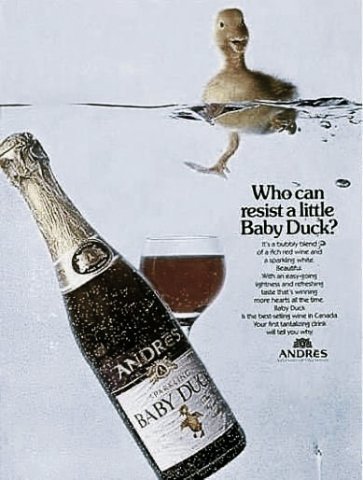
It was three in the morning. They padded barefoot into her kitchen for a middle-of-the-night snack. Toast and cheese on the menu. And a quarter bottle of Baby Duck. A cheap Canadian champagne knock-off.
Joey raised his glass and sang, ‘Jordan wine, Jordan wine/ Any place, any time/ Enjoy the wonderful taste ...’
‘That’s a different wine.’ Joanna laughed.
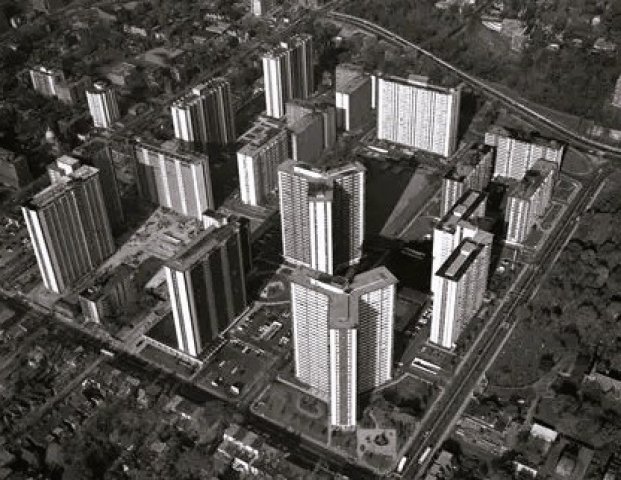
It didn’t matter. The commercial was their song. Well, their jingle. While others celebrated Bob Dylan or Beatle lyrics, Joey and Joanna would always remember the Jordan Wine jingle. The radio played it constantly during that week. Now it drifted from an anonymous apartment somewhere in the dense, multi-towered St. James Town complex Joanna called home.
'That is our jingle,' Joanna said, downing the wine left in her glass. They had retired to the balcony to bask in the warm night air and toast their relationship. She set the glass down on the railing and put both her arms around Joey's neck. 'I love you.'
'I love you,' Joey said, absurdly happy. He leaned down and kissed her. A few seconds later they heard the distant sounds of smashing glass beneath them.
'What's that?'
'Oh my God, I knocked my glass off the edge.'
'Wait for the screams,' Joey said, laughing. They listened, watching to see if any lights came on. Nothing. 'I'll get you another glass.'
'No. Stay here. Hold me. Just hold me.'
Joey stayed, draping one arm warmly around her shoulder. With the other, he suddenly hurled his glass over the railing. The sound of breaking crystal returned along the same dark path the glass had just journeyed. They both stared at each other. Again, no screams.
‘A good omen’, he said.
She hugged him around the neck. ‘Yes. Yes. Absolutely.”
Joey kissed her, swirling in pleasure. This was make-believe; their lips enchanted, dancing on one another's mouths, touching and holding and believing. After a moment, they unfolded two plastic lawn chairs that were stacked against the wall. They sat back, silently squeezing each other's hands like an elderly couple feeding pigeons in a park.
'Let's wait up for the sun,' Joanna said looking out into the darkness. 'It's a magnificent view from here.'
Within half an hour, Joanna had fallen asleep, her head resting against his arm. He stroked her hair softly. What was he doing sitting on the balcony of this monstrous building? He instinctively mistrusted high-rise living but now had to acknowledge something magical about it; as if once a certain height, say the twentieth floor, was smashed, one escaped the squalid facts of human gravity. There was a lightness about it, an exhilarating giddiness. If he hurled his penny into the night, maybe it would soar upwards. Fifty-fifty. But he decided not to throw it. The penny was in his pocket in the other room, and he didn't want to break the spell of whatever sorcery was watching over him at that moment. When the sun arrived, he was so dazzled by its beauty on Joanna’s face, he let her sleep. There would be other sunrises. Hundreds of them. He brushed the hair from her forehead and kissed her. Thousands.
'Got it, call me,' Joey said a few hours later. And he entered the elevator backwards, still waving to her. The elevator took him down the twenty floors to the ground. Back to the world, to broken glass on a cement path. Back to his essay. Back to the world of Godot. Then the telephone rang. What evil physical law skulking at the edges of the universe's grand system, insists the telephone call one gets is never the call one is eagerly anticipating?
The call Joey got after midnight was not from Joanna. It was from his mother. Late night. Long-distance. Something was wrong. He heard his mother's voice, anxious, despondent, sorry, say his name. 'Joey.' Something was wrong. 'Joey, I'm so sorry?' she began. He had heard the voice before. The helpless tone. The outstretched hand. Wrong! The word echoed, bouncing back and forth against the walls of the telephone line. Wrong, wrong, wrong, wrong ... don’t say it. Not again. It was Sarah. She was dying. She had suffered a serious stroke. She was not expected to live more than a few days. No-o-o-o!!
And then Joey's mind went cold. He spoke to his mother for half an hour, discussing the arrangements for his grandmother's death. It was another half hour before the numbness subsided. He quietly resumed work on his essay.
The essay was based on the long, rambling, speech that Lucky gives in the first act. Two pages of gibberish, delivered by a mute character when ordered to think. "Think pig!" Pozzo shouts at him, violently jerking the rope that was passed about Lucky's neck in the shape of a noose. "Think!" If the monosyllabic grunt had said piss, Lucky would have urinated. There was no fundamental difference in the activities. Both unleashed stuff of the person. Joey titled the essay:
THE RELATIONSHIP OF POZZO TO LUCKY AS OBSERVED BY VLADIMIR AND ESTRAGON WHILE WAITING FOR GODOT: AN ANALOGOUS ATTEMPT TO SHED LIGHT ON THE RELATIONSHIP OF CANADIANS TO NATIVE CANADIANS AS OBSERVED BY HISTORY WHILE WAITING FOR JUSTICE.
It was disturbing enough to be up Higgins' alley. His writing was fervent, matching quotes from the play with quotes from texts on his course. He justified his unusual approach by referring to Lucky's long speech.
On its own, he wrote, Lucky's testimony is meaningless, jumbling together all sorts of images, names and words like beads on a string. In a different context, however, this jumble is released from the immediate linguistic bonds holding it together in monologue form and exposes a meaning at once absurd and profound. When we juxtapose Lucky and Pozzo's return in the second act—Pozzo now blind, the rope with which he is connected to Lucky no longer a chain so much as a lifeline on which the now completely dumb Lucky leads him—with the lines, "... those who for reasons unknown but time will tell are plunged in torment plunged in fire ...", we become terrifyingly aware of the eventual result of our industrial terror, "... in the plains in the mountains by the seas by the rivers running water ..."; namely a blind Canadian Civilization being led by a gagged culture, "... namely the air and then the earth in the great cold the great dark ..." Punctuated throughout with "for reasons unknown" and?
And here Joey stopped.
His hand was shaking. Sarah's looming death was now surfacing. His pen fell from his fingers. He clasped his two hands together. A sense of dread passed between them, full of pain and helplessness. Images and memories of his grandmother swept over him like quick cuts in a TV commercial. Sarah giving him the penny; Sarah holding him after Gary's funeral; Sarah's letters; Sarah's ageing face, her blue eyes still as clear in her seventieth year as they were in her seventh. For reasons unknown faded in and out, repeating its message. "For reasons unknown ... for reasons unknown ... for reasons unknown." Beneath Joey's palms, his tears bubbled, squeezing through his clenched fingers. He gasped and wept and dissolved.
Technically, the reason was known. Sarah had suffered her stroke while shopping. One moment she was comparing soup prices and the next, she was lying on the cold tiles of the supermarket floor, her cart overturned, her life sliding away. For Joey this was not enough. The memory of his last day of school ten years earlier called him. In a moment of fear, he had hurriedly flipped his penny. And then Gary's death. A Chevrolet Impala had caught Gary and his bicycle straight on, tossed them forty feet in the air, crumpled his body, ruptured most of his internal organs and opened his skull so that he was spread across the street like jam. In his notebook Joey had marked down a "head". It was all he had. But even this had been denied him with Sarah's stroke. He couldn't remember what his last flip had been. Both the "tails" and "heads" notebooks dutifully recorded a last entry: 426,750. He stared at the little marks. Then he realized this was simply the universe’s way; whatever the outcome, events just add up. For no apparent reason other than the outcome itself. Sarah's stroke sat inert and arbitrary in a knot of almost half a million unrelated strands. "The relationship between 1,317 and 426,750 as observed by ___ while waiting for ___” Fill in the blanks.
Joey went back to his history essay. He finished the sentence he had been writing and made it his last. Punctuated throughout with, "for reasons unknown" and notable for its slap to the face of grammatical meaning, Lucky's speech gives the analogy an intimate sense of the banal gobbledygook locked into the fabric of our existence. It would have to do, he told himself.
Years later, Joey would read that in response to a question asking why Lucky was so named, Beckett had replied, "I suppose he is lucky to have no more expectations."
Later, not much later, Joanna stopped by the taste of wine on her lips. She apologized for not having telephoned, but she had been offered a lift and didn't think it worth him having to tramp out to the subway late at night. He nodded dumbly, barely aware of what she was saying. She asked him what was wrong. He held off telling her until they had undressed and were in bed. Then he told her. Everything. About the phone call, about Sarah, and about Gary. And she held him as he wept.