

Magnus at Theater for a New City
Wendy Biller Writes, Directs and Choreographs
By: Susan Hall - Aug 31, 2026
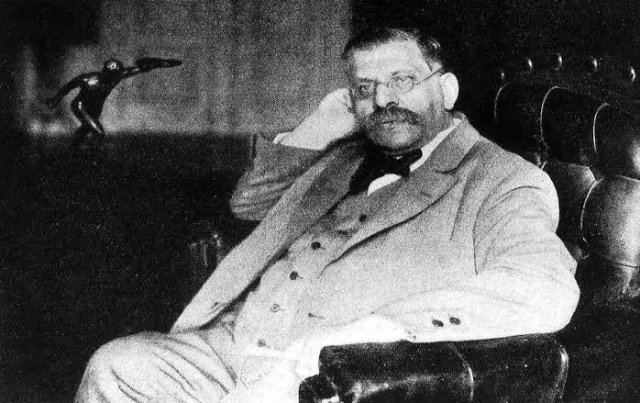
Theater for the New City is presenting Magnus, written, directed, and choreographed by Wendy Biller.
It is an animated evening of theater, with the physical movements of the actors contributing a moving image to the story being told.
The center of the drama is Magnus Hirschfeld, a German Jewish physician who, at the turn of the last century, discovered that human sexuality is as varied as the human personality. Freud would take up the idea of polymorphous perversion—that is, that people experience their sexuality on an ever-expanding line of feeling, from heterosexual to homosexual, with bi, trans, and queer in between. This was over a hundred years ago. Not until 1968 did East Germany ban discrimination against homosexuals. Article 175 of the 1871 unified German constitution had forbidden homosexual acts.
Since Assyrian times, laws have been put on the books banning same-sex relationships. The church has historically been implicated in the process of banning sexual choice. Freud did not like Magnus because he thought that homosexuality was determined by early childhood experience. His view had the consequence of forcing homosexuals to spend years in analysis to get over their disease. Unforgettably, Alan Turing, the second most important person in winning World War II, chose to kill himself rather than face sexual rehabilitation in 1968. It is still a charged issue today, although in America, Stonewall has relaxed the parameters.
Magnus argued that we fall on a huge spectrum of choices of sexual and gender identity.
Magnus is on stage in this show as a ghost—hovering over the proceedings. We meet him first when two gay screenwriters take a meeting with a Hollywood executive, pitching this story to film.
The essence of this drama is how misunderstood creation is at every step of the process. For the screenwriters, the ideas of the studio executive who can greenlight the project are horrendous and have nothing to do with Magnus. The executive cares less about Magnus than potential box office receipts. Magnus hovers in the background, bemused.
For many reasons, it is a difficult story to get right. Even if you are telling your own story—and particularly for the Black screenwriter—there are complications. The cast includes S. Brian Jones as one of the screenwriters, a real activist in the education and publishing world. Taylor Brandon plays his white partner. We get a clear feeling that being mixed race and also gay has not been an easy path. And dealing with Hollywood executives whom you have to please in order to have a payday is never easy.
Like many people who have come upon Dr. Hirschfeld long after his time, these screenwriters adore him and want to protect him.
The setting of the Weimar period is musical—a cabaret performance by the enchanting Caroline Hawthorne in full flapper attire is completely engaging.
This is a tough subject and deserves to be staged. It is so rich that we are sometimes overwhelmed by the complexity. If it were a bit simpler, with the stunning performances directed by Ms. Biller, the play would capture a wide audience.