

Driving Miss Daisy Is a Blast in Pittsfield
Debra Jo Rupp Sizzles in Iconic Role
By: Charles Giuliano - Jun 01, 2026
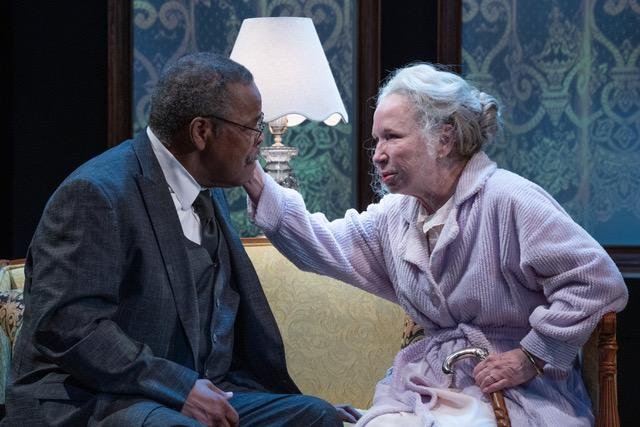
Driving Miss Daisy
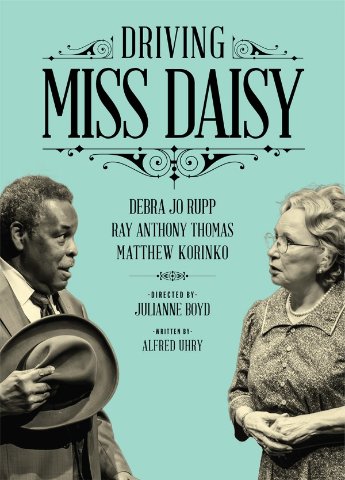
By Alfred Uhry
Directed by Julianne Boyd
Scenic design, Bert Scott; Men’s costumes, Brian O’Keeffe; Daisy’s Sara Jean Tosetti, Lighting, David Lander; Sound, Alexander Sovronsky; Projections, Tim Brown
Cast: Debra Jo Rupp (Daisy Werthan), Matthew W. Korinko (Boolie Werthan), Ray Anthony Thomas (Hoke Colburn)
A co-production between Barrington Stage Company and Palm Beach Dramaworks
St. Germain Stage 36 Linden St., Pittsfield, Mass.
85 minutes, no intermission
May 27 to June 21
Transfers to 62 Center, Williamstown, June 16 to July 5
In 1988 Driving Miss Daisy, (1987) by Alfred Uhry, won the Pulitzer Prize for Drama. A year later the film adaptation won Academy awards. It was directed by Bruce Beresford and written by Alfred Uhry, based on his play. The film stars Jessica Tandy, Morgan Freeman, and Dan Aykroyd.
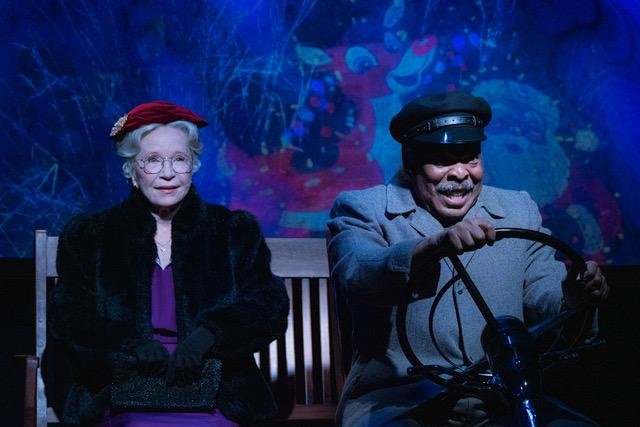
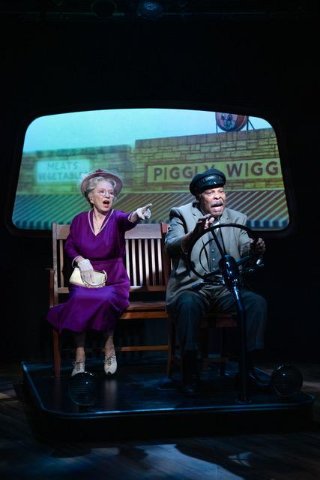
While the film is readily remembered the thrill resides in what the Barrington Stage Company has done with a beloved iconic play. Director Julianne Boyd has played an ace by casting a Berkshires treasure, Debra Jo Rupp, in the meaty role of the feisty, septuagenarian, widowed Jewess, Daisy Werthan. She is richly supported by Matthew W. Korinko, as her successful businessman son Boolie Werthan, and Ray Anthony Thomas as Hoke Colburn, the chauffeur hired by him.
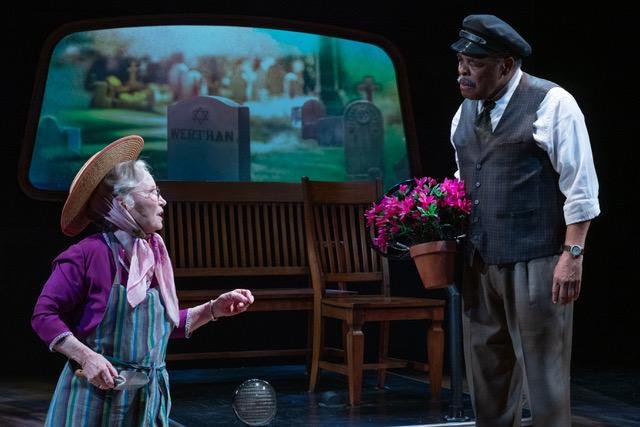
In the 120 seat theater the audience is close enough to absorb every quirky gesture and expression as Rupp wiggles and waggles her way about the stage. Remarkably, as the play progressed from 1948 through the ensuing 25 years, her body language stunningly reveals the inevitable progression of aging. Lordy oh Lordy she is a sight to behold and an obstinate venomous creature that it would take a snake charmer to tame.
A middle aged widower Hoke is a well calibrated match for her every twist and turn. It’s eye candy to watch as they bicker and quarrel each struggling to control absurdly mundane but volatile circumstances.
Retired from driving a milk truck he can use the work. Boolie offers $20 a week, which is seemingly adequate in the Post War economy. While he refuses to tell her what he is being paid, she muses that $7 a week is sufficient. Later, another lady bids for his services with the promise of a raise. This leads to a bidding war and Boolie ups the salary to $65 a week. Hoke counters that $75 would be better.
This reveals something of Hoke’s character. Daisy, a former school teacher, is shocked to learn that he is illiterate even offering to teach him to read. He may lack education but Hoke is richly endowed with pride and the natural wisdom of life experience. While he knows his place he exudes a manly dignity. This is an all too familiar trope of Southern culture and literature. He relates witnessing a lynching as a child.
What defines and signifies this drama is her Jewish heritage. From first hand experience Uhry delineated her as a largely secular reformed Jew. There is no menorah on this tight set but much is made of her weekly drive to temple. There is a complex discussion of the Jewish community that she functions within. Her family has long resided in Atlanta and her manner is truly Southern in all that implies. Prosperity in Post War Atlanta has attracted a new generation of relocated Northern businessmen. Daisy sees them as different and there is a raw social edge which is a simmering reveal of this underrated drama.
That surfaces when Hoke is late on the Sabbath to drive her to temple. In a burst of dialogue, he describes heavy traffic resulting from a terrible tragedy. The temple she attends has been bombed. It’s obvious who is responsible. For Daisy and Hoke there is common enemy.
The liberal Jewish community supports the civil rights movement. There is a benefit with Dr. Martin Luther King, Jr. as featured guest and speaker. She has two tickets but Boolie argues that attending may result in alienating important clients.
On the way to the event she offers the other ticket to Hoke. He erupts in anger. If she truly wanted him to join her why not make a “proper” offer rather than at the last minute. The incident challenges her belief that she is not prejudiced.
In the final stage of the play she is growing ever more feeble. He is losing eyesight but insists that he can still drive. It’s particularly poignant at this stage, after so many years together, that she says “You’re my best friend.”
It’s a gut punch that will linger with me for a long time.