

Experiments in Opera at HERE
Constance the Con Artist is Brazen Fun
By: Susan Hall - May 20, 2026
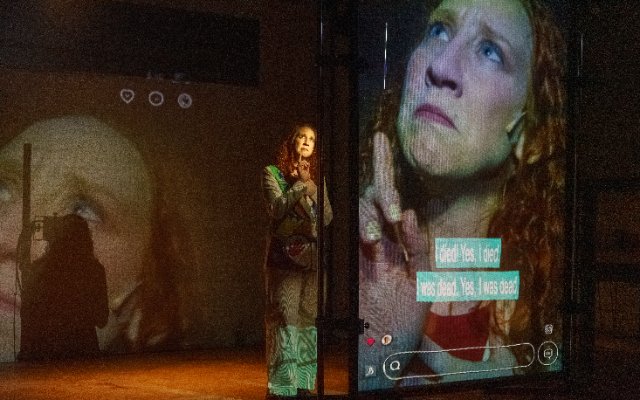
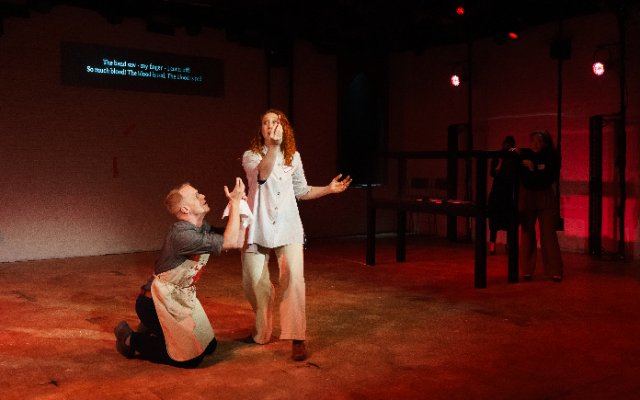
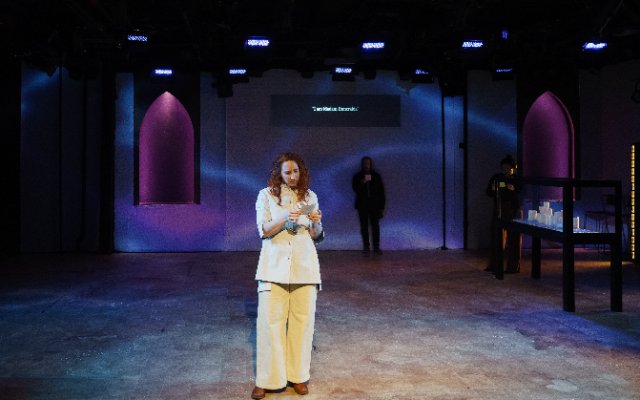
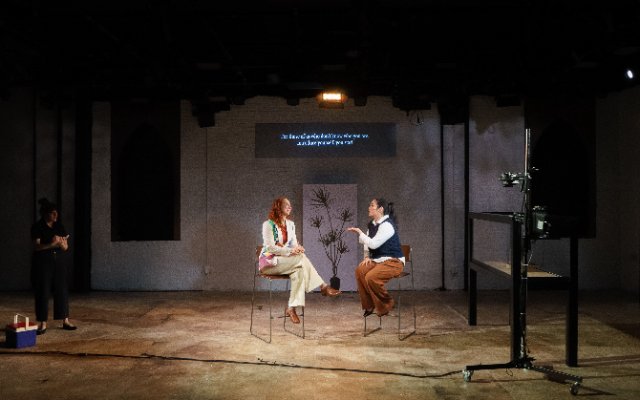
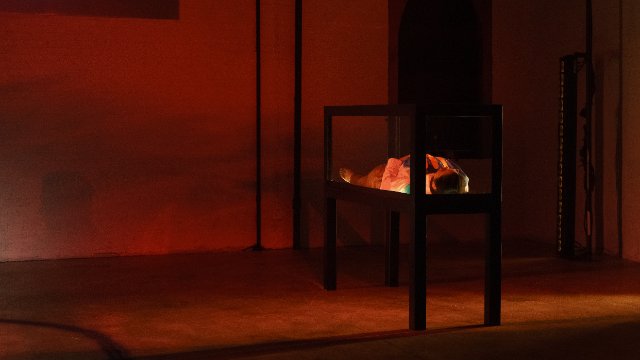
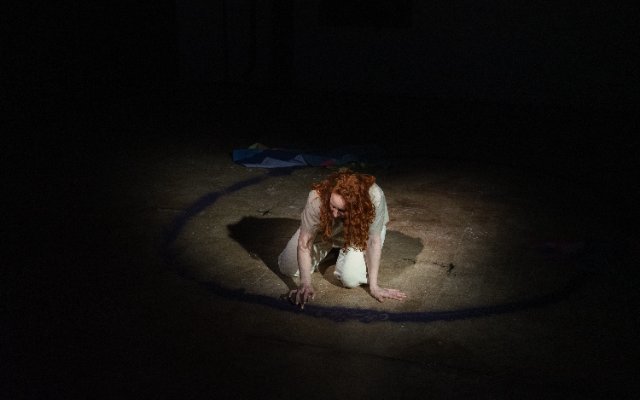
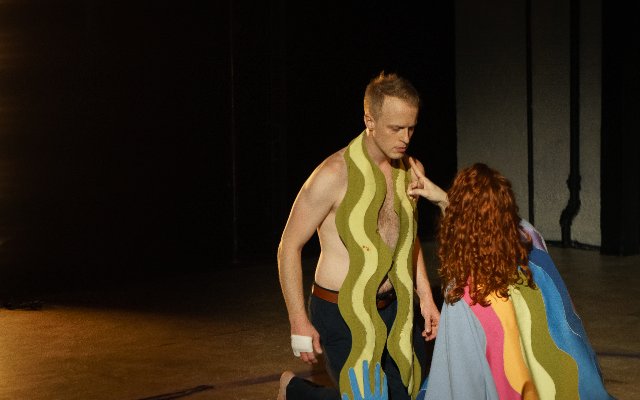
Constance: A Confession, the new work from Experiments in Opera, is the sixth opera created through the company’s distinctive collaborative Writers’ Room process. Modeled on the fast-talking creative rooms dramatized in the movie Mank, writers and composers gather together to hash out stories—often serialized, almost soap-operatic in structure. But these are serious soap operas, laced with genuine laugh-out-loud humor. An evening with EiO is fun.
The con woman Constance is, by turns, an artist, a fortune teller, a social media expert, and finally a baptizer—religious fraud becoming the fallback when every other hustle collapses. Yet Constance is not merely about deception; it is about power. As a self-styled Rainbow Warrior, Constance becomes seized by inspiration, transcending herself into a brazen, almost mythic figure.
Even as the collaborators gleefully undermine narrative consistency, storytelling remains sharply defined. However aggressive, disruptive, or daring the work becomes, it never loses its human core. The revue-like structure blends comedy, music, and stylized gesture, embracing the messiness and contradiction of life itself.
The production is directed by Shannon Sindelar, who also serves as EiO’s managing producer. Sindelar has exactly the right touch. She understands that the librettists’ language functions as music in its own right: the lines rhyme, pulse with rhythm, and practically sing on their own.
Dimitriy Glivinskiy leads a who’s who of downtown musicians. The score is delightful—driven by a strong jazzy beat yet frequently startling in its beauty, a quality contemporary opera too often avoids in favor of austerity. Perhaps it takes the communal spirit of a Writers’ Room to reclaim melody, so often dismissed as conservative or conventional.
Alongside the mischievous Sydney Anderson as the con artist, baritone Nathaniel Sullivan plays the “mark,” with mezzo-soprano Sishel Claverie as an “enabler” and soprano Zen Wu as a “skeptic.” Their stylized gestures serve multiple purposes at once: emphasizing language, revealing character, and abruptly cutting off action just long enough to jolt the audience back to attention.
What happens when the singular artistic voices of composers like Giuseppe Verdi and Richard Wagner are left behind in favor of collective creation? Constance offers one possible answer. The Writers’ Room itself must be a spectacle: whip-smart artists tossing out lines, building on one another’s ideas, doubling down on jokes and provocations. You can feel the ad-libs, the spontaneity, even the delight of half-formed ideas suddenly catching fire.
The sounds the collaborators make together evolve organically into words and music. Lust becomes satire; frustration and loss remain palpable beneath the comedy. Characters are capable of real grief, even as vulgar exaggeration and parody explode into terrific opera.
At HERE through May 26.