

Arts Leader Ted Landsmark
Served on MFA Board and Chaired ICA's
By: Charles Giuliano - May 08, 2026
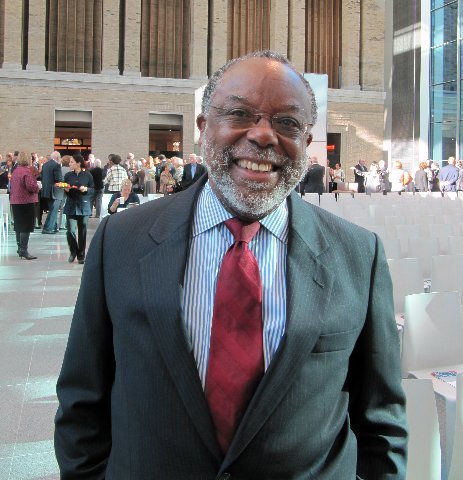
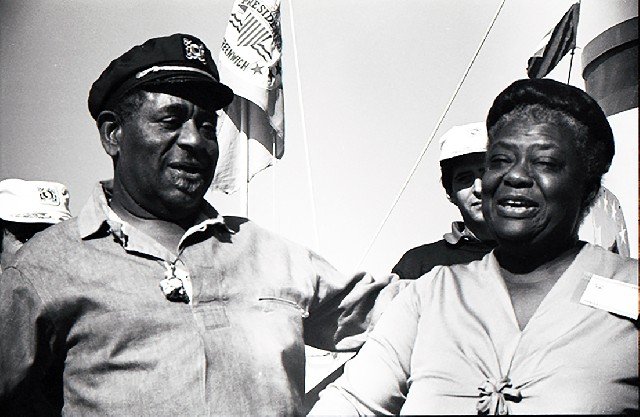
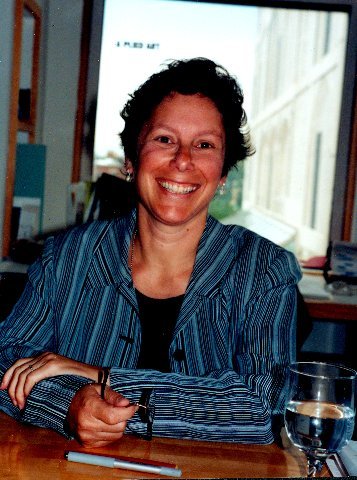

Ted Landsmark (born May 17, 1946) overcame poverty, childhood polio, and daunting obstacles to forge a distinguished career with many singular accomplishments.
In a pilot program he was one of four black students admitted to NY’s elite
He recalls that “When I got to Yale there were 1050 undergraduates in my class and only 16 of us were black.”
He chaired the board of
When we met for what follows he was president of
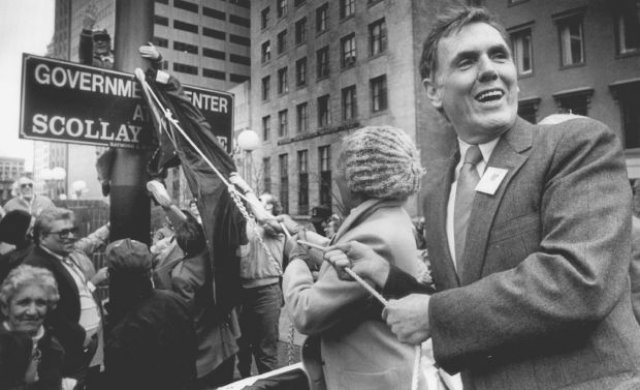
Before a career in arts and administration he worked at City Hall for Mayor Ray Flynn. He is widely known for being the subject of the famed photograph The Soiling of Old Glory, which was taken by photojournalist Stanley Forman and won the 1977 Pulitzer Prize for Spot News Photography. On Landsmark’s way to a meeting in
Charles Giuliano; Where and when were you born?
Tea Landsmark: Today is my birthday, I’m 53 and I was born in
CG Where did you get your training?
TL I was an undergraduate at Yale in political science with a minor in art. Then I went to
CG What brought you to Yale?
TL I was in
CG By percentage that’s less than a point. How did you feel about that?
TL I had grown up in NY and most of the kids in
CG In the entire NY school system.
TL Initially, yes. We served as shock troops to test the proposition that being placed in a predominantly white school would make a difference in being able to survive socially. That was not a program that lasted very long. NY found other ways through magnet schools and programs of integrating classrooms. Personally, I survived socially, but in some respects I was helped because I had polio when I was very young and I was already used to a certain level of social isolation; because I grew up wearing braces and special shoes.
CG There seems to be no evidence of that now.
TL Very little.
CG Those were the days of the iron lung.
TL I spent time in the iron lung.
CG People were not supposed to go to movies and beaches.
TL That’s right.
CG I remember those years in the 50s.
TL I had polio just a few years before the vaccine. I guess I was one of the last American kids to suffer from that.
CG You spent time in an iron lung, amazing, well that hardened you up for a life in the arts. What about your home environment. Was your Mom encouraging?
TL My mother was a nurse who decided that her opportunities for career growth were limited because she didn’t have a college degree. So, when I was in junior high school, she started to attend
CG Is your Mom still alive?
TL Yes, she is. She is 79 this year. I have three step brothers. She remarried when I went away to school. I actually gave her away at the wedding. One of the ways that I have always questioned one way bussing programs. is that my own experience led me to believe that there is a level of social isolation that occurs in programs such as Metco where the assumption is that the best and the brightest from a particular neighborhood with predominantly ethnic characteristics are sent away to primarily white schools and the exchange is not a mutual exchange. Socially, those students leave their communities early in the morning and come back late in the afternoon. Over time they become disconnected from their home communities. Because they are on the busses they also don’t get equal opportunities to interact with the social life at the school they are attending. I’ve had a number of parents whose children have been involved with those kinds of programs say to me quietly that they feel a sense of social isolation on behalf of their children which they hope will be addressed when their children get into college. In a number of circumstances those parent will push for their sons and daughters to go to historically black colleges so that they can reconnect with aspects of their own culture that they loose touch with because of that kind of one way exchange.
In my own case I learned a great deal about a
CG Did they accept you?
TL Yes. It continues to be very easy to be accepted as a young person who is interested in art and culture across racial lines. You see that in hip hop, at dance performances and concerts. Young people at cultural events have a strong tendency not to carry the same racial biases that one finds in other parts of the society. It’s been long acknowledged that culture serves as a bridge that crosses race and class lines and I certainly found that to be the case. When I was growing up in NY when we went to the Village we went as a group of young people. When we went to the Met, MoMA and Guggenheim, the Bonnell Library, we were all accepted and we had a kind of community among ourselves that most of us found useful later.
CG What attracted you specifically to the visual arts?
TL That’s a good question. At Yale I studied photography with Walker Evans. He had an advanced course in photographic technique he came in and you did your work and he commented on your work. I was doing a lot of documentary work at that time. I hadn’t realized who he was until I was midway through the course. It was only when one of my roommates showed me a copy of “Let Us Now Praise Famous Men” that I understood why it was he liked my work and why it was the two of us got along very well. Prior to that I think I found visual art in NY in the midst of the dominance of abstract expressionism in galleries to be something that was challenging to the way I looked at the world. I saw the world in a very literal, graphic sense.
CG You would have made a good social realist.
TL Yeah, as a matter of fact, I still like that work particularly Reginald Marsh and others of that school but I was very familiar with a kind of gritty documentary view of the city. My own photography from that period reflected that. I was doing some photo journalism for the high school paper. Again, when I was at Yale, and I was very used to photography as a documentary medium. When I went to museums and looked at color field painting, Rothko’s work in particular, early Pop work. It forced me to rethink how I looked at a lot of visual expression. Advertising and black and white TV in terms of my own work I was very much taken with the work of Aaron Siskind, Minor White, and Harry Callahan, I had an affinity for Walker Evans and Gene Smith but I was fascinated with the more abstract work that paralleled what painters were working on at that time. Painting and the abstract expressionists forced me to reconceptualize how I looked at almost anything; fashion, color sense, decorative perception, space. I went to museums just to have the way I looked at the world challenged. It’s very easy when you live in virtual poverty and you’re surrounded by fairly gritty circumstances to view the world in a very literal sense and looking at the painting in the galleries and the museums at that point gave me a way of looking beyond that sense of how the world could be pictured.
CG IT strikes me that as one of those four, chosen kids, to a large sense you have had to define yourself culturally, socially, intellectually, artistically. You are a person who invented and defined yourself. There were no templates for who you are or what you became. Having done that, you have assumed a role of defining undefined territories in the arts. You are an explorer. On the medieval maps where they ran out of space they wrote, Hic Transit Dracones. Here reside the Dragons, terra incognita. I get the feeling that you like those edges and territories. You have made a life and career of defining unknown territories. Is it fair, can you relate to that?
TL I spent a lot of time in school and after trying to determine if there were any clear role models whose career paths I might emulate. At that point, and to a large extent today, I found very few African Americans who had leadership roles in the arts, law, culture, finance, academic administration, in any of the roles I found interesting. There were some artists who achieved a certain level of prominence and then went on to form their own dance companies. There were musicians who assumed prominent roles with record companies. But apart from those examples, I found very few role models in any of the professions that I might have had an interest in pursuing. I had no interest in being consigned to a place in this society that limited my opportunities. So I realized fairly early on if I didn’t have easily identifiable role models I would have to do my own exploration and I have always been very comfortable doing that because I’ve been curious and willing.
CG You’ve been doing that all your life from a very early age.
TL I have taken on those kinds of roles. I have had friends who have been explorers. Who, for one reason or another, have found it difficult to accept all of the responsibility that sometimes comes with being in that role. Of the group of us who were black, who entered Yale Law School when I did, fully a third did not complete because they felt that the external and internal pressures were something that they didn’t want to have to deal with when they envisioned themselves as the kind of people who were graduating from Yale Law School.
The same has been the case in a number of settings I’ve worked in. There are a great many other people who could now be doing many of the same things that I’m doing but who opted to take different career paths. Because, often, when one is somewhat out ahead of what the expectations are for the roles that we are normally assigned. One very quickly finds there is not a lot of social support for what you are doing. Not always a lot of peer support because the circle of friends tends to be a small one. It’s not always easy to assume a position that often makes one much more visible than one’s white peers doing the same kind of work.
CG Do you feel that you are put to a different level of accountability?
TL I generally find myself standing out in a lot of crowds and if I want to be viewed as a role model in that circumstance, or not, my visibility alone imposes a higher level of accountability.
CG It can also work for you. It’s a wakeup call and attention getter.
The uniqueness of it and the desire for having someone like you would open doors and create opportunities.
TL Many of the people I sit on boards with understand that the road that I’ve traveled to get there was often a much more arduous road than they traveled to get there. And, they respect that and understand there is a credibility behind things that I may say that emerges from the distance I’ve traveled to get to the same place and so sometimes the fact that I stand out because of my different background has worked to my advantage because people understand that I had to work very hard to get here. Someone white may have gone through the same experience but people don’t necessarily make the same assumption until that person declares that they have made the same effort.
CG The Horace Greely syndrome. So what if you carried your shoes through the snow. Didn’t everybody? What boards do you sit on?
TL MFA, I’m on leave from the
CG How many board members of the MFA are there?
TL 33 or 35.
CG Why are you on leave from the
TL Because of the arm’s length relationship as they move forward with their plans and we move forward with our’s here (BAC). We’re back door neighbors.
(When the
CG You were formerly the ICA Chair.
TL Yes, President of the Board through calm and tumultuous times.
I’m an overseer at the Peabody Essex and I serve on education committees at
CG That’s your dissertation field is it not?
(Landsmark eared his PhD at
TL They were very helpful with research. My topic was what the narratives of collections of 19th century African American crafts say about collectors and about life in 19th century black communities. Anyone who collects materials that might be considered historical does so with a bias that effectively tells their interpretation of what they think life was like at that time. Three different people collecting artifacts from the same time will have collections that look fundamentally different from each other. And that’s not because life then was different. It’s because each one of those collectors focuses on a different aspect of that life and collects that. That’s why different museums look different in their collections. What I was looking at is what stories people believe should be told about life for black people both before and after slavery. The collections I looked at were very interesting in that regard. Because they say a lot about how 20th century Americans look back at slavery and the roots of class distinctions now.
CG How long were you working on your dissertation?
TL I started at BU in 1993 and I got my degree last year. I had to do some course work. Eight courses and then writing the dissertation. I already had a masters in environmental design. It was a masters from
CG What did you do that for? Did you need it?
TL No. I shouldn’t say that actually. When I was at Mass Art, from 83 to 89, I was the Dean of Graduating and Continuing Education and assistant to the President under Bill O’Neill. I was pretty sure then I wanted to make a career of administration of higher education. And a law degree and a masters in architecture were viewed as insufficient in the academic world for a leadership role in higher education. It was apparent one needed a doctorate to get to the upper levels of higher ed administration. And I did a year and a half at Harvard higher ed school which I had to drop out of because my work with the city, I had transferred from Mass Art to my job in the (Ray) Flynn administration. I started as the director of the office of jobs and community services overseeing the city’s employment and training programs and a lot of the city’s community development activities. I had a $19 million budget and a staff of 135. It was very interesting work. Then I moved into the mayor’s office and did more policy work after that. But the intensity of that work made it impossible to continue my studies. After I settled into the job at the mayor’s office I was able to work out a schedule where by 93 I could enroll part time at BU and got my course work done and wrote the dissertation. It struck me that having a doctorate would be useful but it certainly wasn’t essential. But I was interested in the stuff. As part of our effort to reduce gang violence
In black and Latino communities I set out to try to identify some working class role models who were not athletes or entertainers or clergy and who had been able to support their families and leave a legacy in their communities from the 19th century on so people couldn’t say we have to be on the streets as gang members because this is a vestige of slavery.
CG How is being a gang member a vestige of slavery?
TL There were people who made the argument that gang culture existed because of the class distinctions in American society and that gang distinctions were a result or vestige of slavery. So that had to have a political consciousness of slavery in order to understand why gang members banded together now to do things that seem to be so fundamentally antisocial to the predominately white society. That the act of coming together with one’s brothers was an echo of the liberation efforts of black people going back to slavery. It was my belief that while that argument had some validity it didn’t speak to the large number of people of color who had been able to sustain themselves and their families for centuries both within slavery and as free blacks during that period and after. In fact there had always been groups of artisans in Boston and elsewhere who had made things that often had cultural references to African roots and to the extent that we could identify those and use the makers of those kinds of artifacts as role models for kids we were in fact presenting a more working class alternative role model for kids who are growing up today. I set out to find who those people were. I wanted to know who the black silver smiths were who worked with Paul Revere.
We know that there were some but I haven’t been able to identify them by name. I wanted to know who the black furniture makers were who worked with the
CG The
TL They were also selling and enslaving some of their own people.
CG Did you see the Skip Gates series on
TL I don’t know that that kind of personalization was necessary but I think it did add a very human face to his travels.
CG Have you traveled in
TL Not yet.
CG Implying that you will.
TL Oh yeah, absolutely. When we read Olmstead’s diaries of traveling through the South and documenting slavery we learn about slavery but we also learn a lot about Olmstead.
CG Which Olmstead is that?
TL Frederick Law.
CG No kidding.
TL Before he came to be known as the great landscape architect he traveled through the South to study slave culture and to study horticulture and the landscape there. He developed some very interesting diaries and perceptions of the American South and of slavery.
And we learn a lot about him in those diaries. In the same way that Skip personalized his travels through Africa put the same kind of human personal face on the travel and I think that was a useful way of making an understanding of the history and cultures of
CG To me it was a revelation to learn of great libraries during the period of the Western Renaissance in the middle of nowhere that to me was intriguing. I already knew a lot about
TL I knew Kelly Simpson when he was teaching at Yale before I even realized he had any connection here.
CG I notice that you haven’t mentioned Elma Lewis. Have you ever worked with her or the
TL I’ve worked with Barry (Gaither) through the museum and I’ve been a supporter and I share the concern of many people how the work of the museum can be enlarged and better supported. Barry does extraordinary things there. Still there are too many people in
CG Part of the problem, that he will say himself, is that he doesn’t have the budget to do publicity and advertising. It’s tough to get the word out. It’s a two way street we don’t know much about them because they don’t send much out.
TL There is considerable truth to that but I also think Barry is a scholar primarily. He’s a great teacher and speaker who is primarily a scholar and less of a publicist. If I learned anything in eight years of city administration it’s possible for people with very limited resources to have a very large public presence. That’s because they make the enlargement of their public presence their primary task. Barry’s primary task has been as a scholar, archivist, curator and museum director and less as a publicist. You hear him speak and he is extraordinary. What he doesn’t do is the same kind of public relations that other people who are far less gifted than he is can do and to that extent it means that he had needed more from his board and supporters of raising the profile of what he does and they can then support him in fund raising.
CG Why aren’t you on that board?
TL I’ve never been asked to be.
CG That’s strange. Elma Lewis. What’s your take on that? In 1968 when I first got involved in the arts in
TL I wouldn’t say that. Elma has made it possible for a lot of us to go on to work in a variety of different settings. You will find that there are a great many people who credit Elma with having exposed them to the arts generally, through dance classes they took, through Black Nativity, through Barry’s work, through music classes, what have you. What has not happened has been a coalescing of that energy. Into one place other than Barry’s where multiple outlets for artistic expression could continue to exist.
CG The school burned down (arguably the result of arson).
TL Yeah, at the height of Elma’s activity with the school.
CG And there wasn’t the money to rebuild it.
TL There have been institutions comparable to the school who have had similar tragedies and they have rallied to recreate themselves in similar or different form. It will always be something of a mystery as to why that could not have happened after the fire at the
CG Is that unique to
TL I’ve come to believe that it’s partly because unlike other cities of comparable size
CG Is
TL I don’t think so. Historically,
CG But two gays (Barney Frank and Gary Studds)
TL That’s nice.
CG And a priest (Father Dreinan).
TL That’s fine. But that says more about fragmentation within our community and an inability to create a critical mass and it suggests that there is any kind of effort on the part of white society in
But in each of those cities where black leadership came forward it came forward largely because the black community was unified and the white community recognized that strength and was prepared to support it. That has not been the case here. Because of racism in the schools, for example, and because of racism in the fire department and housing authority and other places, a group of whites have essentially conspired to deny blacks positions of leadership. But that could only succeed under circumstances where the black community itself, is, and continues to be, divided within itself and
CG Let’s get on to the
TL They have been but they needn’t be. This economy in this region had generated a tremendous amount of new wealth. And there is a sufficient amount of that new wealth to sustain these building projects. But that will require that bridges be built to the people that have created that new wealth. And many of those people are not yet actively engaged with the institutions that need the resources. So if one were to only look at the traditional pool of donors to culture there would have to be some concern. But the fact is there are wealthy entrepreneurs coming out of high tech, the dot-coms and bio tech and a range of other areas who have barely been approached by many of the people involved in developing funds to supports cultural institutions. So it is my belief that over the next five to ten years the funds will be there. Much of that money is there already. But it will come from places that will only seem surprising when the names are announced. If you look at the Globe’s listings of the top companies in this region, in terms of their impact, Fleet and Gilette are near the top but they are not at the top of those lists. If you are looking at the largest, most influential, the most employees, a number of the companies on that top 100 list didn’t even exist ten years ago. You have to look at that list and who the principles of those companies are and the ages of some of those principles and look at the connections between those firms and those principles and the major cultural boards at this point and there are still bridges to be built.
CG What’s the point of building all these new buildings if there is no audience? The
(The 2024-2025 attendance marking the end of the tenure of director Jill Medvedow was some 250,000.)
TL The ICA as small as its current audience is has actually grown its audience in the past couple of years and will continue to do so by connecting with a younger and curious group of entrepreneurs. Some of whom have done very well financially and many of whom collect through Boston and New York galleries and who want a place to rally to, and who haven’t necessarily felt that the MFA even as it’s moved forward to bring in a contemporary curator, satisfies their need and curiosity for the need for networking and information on contemporary art. The Rose does wonderful and very interesting shows as does MIT but for many collectors they are inaccessible. It’s not that easy to connect by public transportation to the Rose if you’re thinking of going to Brandeis in
The Institute creates a critical mass and Jill (Medvedow) has made it a high priority to take much of what the
CG Are people going to go down to the waterfront in sufficient numbers? Is the
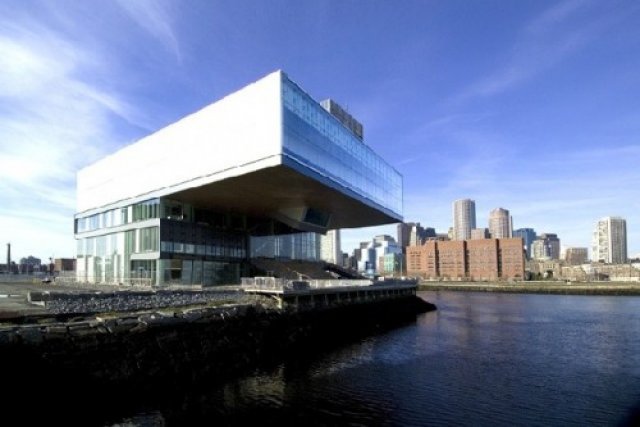
TL Well it’s in a building that people don’t know it’s a museum. All it says on the outside is
CG That was Milena’s argument and they shot her down. She had a lot of plans for signage and increased visibility on the street level. The board didn’t go for it.
TL I think you are very wrong about that. There were a lot of us on the board who felt we needed much more of a public presence on
CG Are the shows more accessible now?
TL I think they are because they are presented in ways that enable an audience to connect and relate to them in a more visceral and emotional way. The “
CG I’m not going to argue with that show but what about the others?
TL What about the recent show that was just reviewed in the Wall Street Journal. “The Steam Roller” (Cornelia Parker) looking back we can think of several shows since Jill has been there that are memorable in a positive way. Not everyone is going to like everything that goes through there. But Jill has made a very substantial effort to make them more accessible.
CG If I go over there now at best there will be twelve other people.
TL If you go over to the MFA right now and visit the Weston show you will probably see twelve people. If you are going to measure the success of an institution based on how many people are in a gallery at 3:30 on a Tuesday afternoon then none are going to be viable. The reality is that the people you want are working or raising their families, picking their kids up from school, or a range of other things at 3:30 on a Tuesday afternoon. That’s going to be the case here and at the Peabody Essex, at the Fuller, de Cordova, Danforth, and the case at the
CG Then everything is copasetic?
TL No I’m not saying that. What I am saying is that.
CG How are you measuring success?
TL I am partly measuring success in terms of audience but I am also measuring it in terms of an institution’s ability to impact on public consciousness of public art. The mere fact that the ICA was designated to move down to the waterfront, and this mayor has endorsed that, and the developers believe that having contemporary art on the waterfront is integral as an anchor to draw other cultural institutions into that area is I think important. I think it is extremely important in this city. Tell me the last time it happened? That any cultural institution in this city has had that kind of impact? Probably the ballet opening its Graham Gund building in the South End. But it’s been a long time since we’ve seen any cultural institution development of a parcel that has had a kind of impact in terms of raising public consciousness of the work of that institution.
CG The BCA is building but seems to be encountering problems.
TL That could be but the
CG How are you evaluating Jill at this time?
TL You mean in terms of criteria.
CG However you want to put it. What’s your take?
TL Well you know I have a bias, I’m a big fan of hers. In think that the energy she has brought and her commitment to making contemporary art accessible have worked very much to the advantage of the
CG Should they collect?
TL My own view has always been that they should have a formal working relationship with the MFA. They should be the non collecting affiliate of the MFA. They should maintain their independence and integrity but I would like to see something that now parallels in NY, the relationship between MoMA and PS1. I’ve favored that for about ten years. I thought if they were going to move, and I advocated this when I was on the Board, that they should move to that site across from the MFA on
CG I’ve always looked at a collection as collateral. It grows and accrues value. It’s a chip to play with at the bargaining table. If you have 60,000 square feet and an increment of that is a permanent collection it would give you another reason to go down there.
(There are systemic issues with the waterfront
TL Yeah, but there are other ways of dealing with that. Suppose the
CG Well then, let’s talk about the MFA which is pretty pathetic in terms of collections, and contemporary programming
TL the Board was presented at its last meeting with a policy statement on contemporary art that Steve Grossman and a group of other people drafted. The expectation at this point is that the commitment of the museum will be ratcheted up significantly and that should begin to show up even in this upcoming budget cycle I don’t know what it is going to look like. I know Malcolm (
CG For about a century.
TL I don’t count “Wallace and Gromit” because that was geared toward attracting a young audience.
CG Michael Mazur, Karsh, Cars, Herb Ritts, Guitars, Koch’s yachts moored in front of the museum?
TL The ICA has taken on the more challenging projects in that regard. I think that one interesting thing that happens in
CG I don’t see it with the current curator. Cheryl Brutvan is not the right person for that.
TL That will be your judgment to make.
(Malcolm had no eye for contemporary art and Brutvan did his bidding. There changed when Matthew Teitelbaum, whose field is contemporary art, followed
CG The List is today, the
TL I’m not going to try to challenge you on that. You’re the critic.
CG When Brooklyn did “Sensation” last year there were two reactions. There was the Mayor’s reaction and then the art world said, what’s the big deal, this is five year old stuff.
TL Saatchi showed this in
CG More than two. From an insider point of view what was the big deal about “Sensation?” The majority of that work had been seen in
TL That’s fine but you also have to ask, what roles particular institutions ought to play in the city that has a very broad range of venues to show work.
CG If the
TL You can’t ask any single institution, be it the MFA or the
CG Take the recent
TL What I’m saying is that where you have multiple venues and long-term, self sustaining venues. Like the List and Mobious often what needs to happen is for the larger institution, through appropriate partnerships, encourage private collectors to acquire stuff with an understanding that that stuff will ultimately come to the museum. The museum has demonstrated that it is committed to showing that kind of work with exhibitions, programming and everything that goes with that. Showing contemporary art in a way that makes it accessible to people. Right? But, the museum itself doesn’t have to hold all of it in its own holdings throughout that whole period if it has done the right work with collectors. And, I don’t think the MFA has done that with contemporary collectors.
The good quote is major institutions have a responsibility to establish creative partnerships with cutting edge and risk-taking institutions in ways that support the work of those risk-taking institutions. With the understanding that some of that risky work may ultimately end up in the museum but that it is not necessarily the responsibility of the museum to do the holding for the long term at the beginning. In the same way that large companies will create or support independent ventures, r&d activities, through related or supported companies. The same thing has to happen in culture. And it could. It’s my view that the MFA has to find ways to have reactive supports for risk-taking institutions of Contemporary art in the same way that it has supported at a low level Barry’s work at the National Center For African American Artists.
CG I often feel that the
TL But your wouldn’t feel that way if you were one of those mothers up in
CG In what sense is the
TL The work that Jill has done for the ICA in a number of Boston communities is I think a significant step forward in terms of taking contemporary art off of gallery and museum walls and putting it into communities where it is accessible. Jill takes the heat because she is the director of the
CG Not at all.
TL Right, how do you explain that? I think there are ways to make that happen. Most of the artists are pretty well educated and I think there are ways for the universities to do things in those places where the artists are that would build relationships. By things I mean supporting local openings. Developing paired shows, for example, between Bernie Toale’s gallery and one of the university galleries where there is some dialogue and exchange. A group of artists are about to be displaced from the Fort Point Channel. At this moment we have heard nothing from the established arts community in support of those artists except that a small handful of us have started to talk to the developers, quietly, about preserving a presence of those working artists in those communities and that’s happening not only in Fort Point but in Jamaica Plain. And it’s happening in other parts of the city. There are artists who have kept real estate viable in certain marginal areas for the past three decades and now the developers and owners of those parcels want to cash out and evict those artists. At the same time that business leaders are pointing out that the arts have a $6 billion impact on the local economy in