

Saariaho's Innocence Arrives at the Metropolitan Opera
Will the 21st century Masterpiece Succeed in New York
By: Susan Hall - Apr 02, 2026

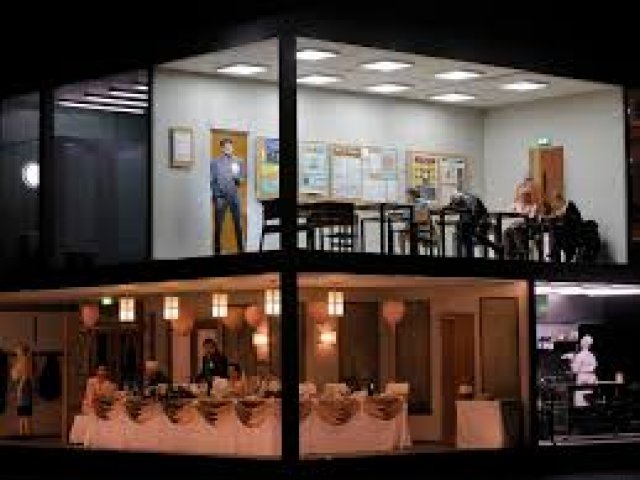
Innocence, a twenty-first-century masterpiece, makes its Metropolitan Opera debut on April 6. Many of the artists associated with the world premiere in Aix five years ago return for this production—first and foremost, the composer Kaija Saariaho.
In this work, she moves away from the spectral techniques—those shimmering notes between notes and hidden overtones—on which she has long relied. The musical language here is instead dense and vividly colored.
The set, created by Chloe Lamford for the original production, is a distinctive rotating two-story structure that carries us through space (a school and a banquet room) and time (the present and ten years earlier). The wedding banquet often evokes The Last Supper in its long, horizontal tableau.
Simon Stone, the brilliant director, praises the Metropolitan Opera’s stagehands for moving this demanding set continuously and silently throughout the performance. The design fulfills the composer’s wish to have all the characters present on stage at once. Nine languages are spoken in the production. Aleksi Barrière, billed as co-librettist and dramaturg, proves a linguist supreme, shaping a world through language. There is even a Finnish folk singer, Vilma Jää, whose voice weaves among the spoken text of the teacher and the lyricism of the “innocents,” such as the bride (Jacquelyn Stucker).
Susanna Mälkki, who was close to the composer, conducts the score with a particular sensitivity.
Stone is, in many ways, just what opera needs. Through a range of techniques—including material withheld from singers and actors until the last moment—he creates a palpable sense of the present. This can challenge artists who demand perfection of themselves, like Joyce DiDonato, one of the leads in this production. In her breakthrough role as Dido in Les Troyens, one could hear emotion break through the polish of perfection; it was thrilling. Innocence offers that opportunity again.
At a recent event, evident friction surfaced between the Met’s general director and several artists involved in creating the opera. One hopes it will not shadow the work’s new life on the Met stage.